
Roy A. Rothman, DPM, PA
Podiatric Medicine and SurgeonFoot & Ankle Specialist
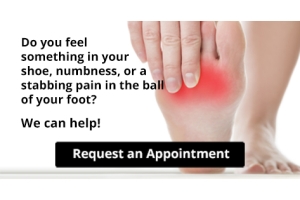

Suffering from this type of pain? You may have the foot condition known as Morton's neuroma. Morton's neuroma may develop as a result of ill-fitting footwear and existing foot deformities. We can help.

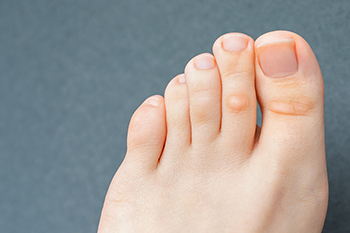
A corn is a small, hardened layer of skin that develops from excessive friction. Despite its small size, it can cause a considerable amount of discomfort. A corn can develop from wearing shoes that are too tight, and a common place to find a corn is on the pinky toe. They can also form on top of the toes with existing foot conditions such as hammer toe or bunions. Some people find that corns have developed between the toes, and these are referred to as soft corns. Mild relief may be found temporarily when a protective pad is worn over the corn. Additionally, it may be beneficial to change the type of shoes that are worn or to wear a different size. If corns are consistently developing, or if the pain level increases, it is suggested that you seek the counsel of a podiatrist who can provide you with correct treatment methods.
If you have any concerns regarding your feet and ankles, contact Roy Rothman, DPM of Florida. Our doctor will treat your foot and ankle needs.
Corns: What Are They? and How Do You Get Rid of Them?
Corns can be described as areas of the skin that have thickened to the point of becoming painful or irritating. They are often layers and layers of the skin that have become dry and rough, and are normally smaller than calluses.
Ways to Prevent Corns
There are many ways to get rid of painful corns such as wearing:
Treating Corns
Treatment of corns involves removing the dead skin that has built up in the specific area of the foot. Consult with Our doctor to determine the best treatment option for your case of corns.
If you have any questions, please feel free to contact our office located in DeBary, FL . We offer the newest diagnostic and treatment technologies for all your foot care needs.
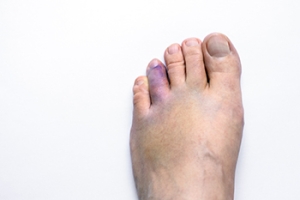
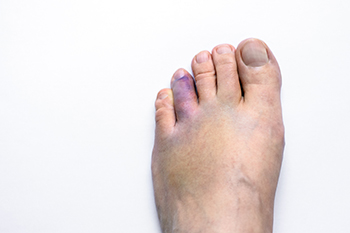
The majority of broken toes are considered to be minor injuries, despite the pain and discomfort they can cause. A broken toe generally occurs due to a heavy object falling on it, or if it is stubbed on a piece of furniture. The symptoms many people experience can include pain, swelling, bruising, and it is often difficult to walk. The buddy taping method is an effective solution to treat mildly broken toes. This is done by taping the broken toe to the toe next to it, which can give it the stability it needs as it heals. It is beneficial to keep weight off of the affected foot as much as possible, and the swelling may be reduced when the injured toe is frequently elevated. If a bone protrudes from the skin, this type of injury needs immediate medical attention, and surgery may be required to realign the bone. If you have broken your toe, it is suggested that you consult with a podiatrist who can offer you treatment options that are correct for you.
Broken toes may cause a lot of pain and should be treated as soon as possible. If you have any concerns about your feet, contact Roy Rothman, DPM from Florida. Our doctor will treat your foot and ankle needs.
What Is a Broken Toe?
A broken toe occurs when one or more of the toe bones of the foot are broken after an injury. Injuries such as stubbing your toe or dropping a heavy object on it may cause a toe fracture.
Symptoms of a Broken Toe
Although the injured toe should be monitored daily, it is especially important to have a podiatrist look at your toe if you have severe symptoms. Some of these symptoms include worsening or new pain that is not relieved with medication, sores, redness, or open wounds near the toe.
If you have any questions please feel free to contact our office located in DeBary, FL . We offer the newest diagnostic tools and technology to treat your foot and ankle needs.

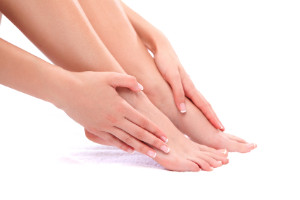
Erythromelalgia, or EM, can affect the feet. It is considered to be a rare foot condition, and common symptoms are redness, burning, and the skin can feel warm. There are two categories of erythromelalgia, consisting of primary and secondary. The former type may be associated with family history and can be more prevalent among children. The above symptoms can become debilitating and will generally affect both feet. The latter classification may be linked to autoimmune diseases or conditions that affect the blood and bone marrow and can be more common among adults. Research has shown that erythromelalgia may be linked to heavy metal poisoning, which may happen if exposed to air or water pollution, lead-based paints, or specific types of medication. There is no cure for this foot condition, but relief may be found by treating the symptoms. This can include taking aspirin, antihistamines, or other kinds of medicine. If you have symptoms of EM, it is strongly suggested that you are under the care of a podiatrist who can help offer relief options that are correct for you.
Some foot conditions may require additional professional care. If you have any concerns, contact Roy Rothman, DPM of Florida. Our doctor can provide the care you need to keep you pain-free and on your feet.
Rare Foot Conditions
The majority of foot conditions are common and can be treated by a podiatrist. Standard diagnostic procedures are generally used to identify specific conditions and treatment can be rendered. A podiatrist also treats rare foot conditions which can be difficult to diagnose and may need extra attention and care.
There are many rare foot conditions that can affect children. Some of these can include:
Freiberg’s disease - This can be seen as a deterioration and flattening of a metatarsal bone that exists in the ball of the foot. It typically affects pre-teen and teenage girls, but can affect anyone at any age. Symptoms that can accompany this can be swelling, stiffness, and the patient may limp.
Kohler’s disease - This often targets the bone in the arch of the foot and affects younger boys. It can lead to an interruption of the blood supply which ultimately can lead to bone deterioration. The patient may limp or experience tenderness, swelling, and redness.
Maffucci syndrome - This affects the long bones in a child’s foot leading to the development of abnormal bone lesions. They are benign growths and typically develop in early childhood and the bones may be susceptible to breaking.
A podiatrist can properly diagnose and treat all types of rare foot conditions. If your child is affected by any of these symptoms or conditions, please don’t hesitate to call our office so the correct treatment method can begin.
If you have any questions please feel free to contact our office located in DeBary, FL . We offer the newest diagnostic tools and technology to treat your foot and ankle needs.
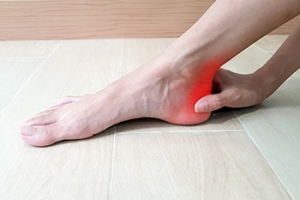
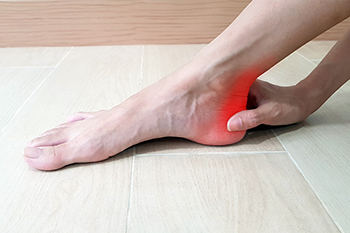
When the tendon that attaches the calf muscle to the heel is completely torn, it is known as an Achilles tendon tear. This injury is often seen in middle-aged male sports participants. The Achilles tendon is the largest tendon in the body, and it is prone to injury, especially during sports involving running and jumping because sudden and explosive force is exerted on it. Certain antibiotics and cortisone shots can make one more apt to tear this tendon, and some medical professionals do not give cortisone shots for Achilles tendonitis for this reason. The main symptom of an Achilles tear is sudden and intense pain behind the ankle. Some who have sustained this injury have heard a popping or cracking sound and describe it as being kicked in the heel. There is often difficulty pointing toes down and some may experience swelling and bruising around the tendon. If you think you have torn your Achilles tendon, it is strongly suggested that you see a podiatrist as soon as possible for a proper diagnosis and treatment.
Achilles tendon injuries need immediate attention to avoid future complications. If you have any concerns, contact Roy Rothman, DPM of Florida. Our doctor can provide the care you need to keep you pain-free and on your feet.
What Is the Achilles Tendon?
The Achilles tendon is a tendon that connects the lower leg muscles and calf to the heel of the foot. It is the strongest tendon in the human body and is essential for making movement possible. Because this tendon is such an integral part of the body, any injuries to it can create immense difficulties and should immediately be presented to a doctor.
What Are the Symptoms of an Achilles Tendon Injury?
There are various types of injuries that can affect the Achilles tendon. The two most common injuries are Achilles tendinitis and ruptures of the tendon.
Achilles Tendinitis Symptoms
Rupture Symptoms
Treatment and Prevention
Achilles tendon injuries are diagnosed by a thorough physical evaluation, which can include an MRI. Treatment involves rest, physical therapy, and in some cases, surgery. However, various preventative measures can be taken to avoid these injuries, such as:
If you have any questions please feel free to contact our office located in DeBary, FL . We offer the newest diagnostic tools and technology to treat your foot and ankle needs.


 Follow Us