
Roy A. Rothman, DPM, PA
Podiatric Medicine and SurgeonFoot & Ankle Specialist


Pregnancy can bring significant changes to the feet, causing discomfort and affecting mobility. Weight gain and hormonal shifts can lead to swelling, low arches, and a flattened foot shape. Changes in the center of gravity may cause an unsteady gait, increasing the risk of falls. Swelling can create tightness and discomfort in shoes, while low arches may contribute to foot fatigue and pain. These issues often result from increased body mass, fluid retention, and ligament laxity caused by pregnancy hormones. A podiatrist can help by assessing foot structure, recommending supportive footwear or orthotics, providing exercises to strengthen the feet, and other solutions for managing pain. If you have foot pain during your pregnancy, it is suggested that you consult a podiatrist who can guide you toward effective relief tips.
Pregnant women with swollen feet can be treated with a variety of different methods that are readily available. For more information about other cures for swollen feet during pregnancy, consult with Roy Rothman, DPM from Florida. Our doctor will attend to all of your foot and ankle needs.
What Foot Problems Can Arise During Pregnancy?
One problem that can occur is overpronation, which occurs when the arch of the foot flattens and tends to roll inward. This can cause pain and discomfort in your heels while you’re walking or even just standing up, trying to support your baby.
Another problem is edema, or swelling in the extremities. This often affects the feet during pregnancy but tends to occur in the later stages.
How Can I Keep My Feet Healthy During Pregnancy?
If you have any questions, please feel free to contact our office located in DeBary, FL . We offer the newest diagnostic and treatment technologies for all your foot care needs.


If you are suffering from tenderness, pain, or stiffness in the joints of your feet or ankles, call us to schedule an appointment.


Recurrent ankle sprains often occur when the ligaments that support the ankle become weakened or overstretched from previous injuries. Each sprain can stretch these ligaments further, reducing stability and making the ankle more prone to rolling inward or outward during activity. The most frequently affected ligament is the anterior talofibular ligament, which helps keep the ankle from turning excessively. Symptoms of recurring ankle sprains include pain, swelling, tenderness, and a sense that the ankle gives way. Chronic ankle instability can develop if the ligaments and surrounding muscles lose their ability to properly stabilize the joint. A podiatrist can assess the degree of ligament damage and evaluate ankle alignment through physical examination and imaging. In some cases, surgery may be required to restore ligament strength and joint stability. If you have repeatedly sprained an ankle, it is suggested that you schedule an appointment with a podiatrist for a diagnosis and appropriate treatment options.
Ankle sprains are common but need immediate attention. If you need your feet checked, contact Roy Rothman, DPM from Florida. Our doctor can provide the care you need to keep you pain-free and on your feet.
How Does an Ankle Sprain Occur?
Ankle sprains take place when the ligaments in your ankle are torn or stretched beyond their limits. There are multiple ways that the ankle can become injured, including twisting or rolling over onto your ankle, putting undue stress on it, or causing trauma to the ankle itself.
What Are the Symptoms?
Preventing a Sprain
Treatment of a Sprain
Treatment of a sprain depends on the severity. Many times, people are told to rest and remain off their feet completely, while others are given an air cast. If the sprain is very severe, surgery may be required.
If you have suffered an ankle sprain previously, you may want to consider additional support such as a brace and regular exercises to strengthen the ankle.
If you have any questions please feel free to contact our office located in DeBary, FL . We offer the newest diagnostic tools and technology to treat your foot and ankle needs.


Foot stress fractures occur when the bones of the foot are subjected to repeated force without enough time to repair and recover. These hairline cracks often develop in the metatarsals, heel bone, navicular, or sesamoid bones near the toes, and they typically worsen with continued activity. People often experience gradually increasing pain, especially during sports or repetitive movement, and tenderness when pressure is applied. Because swelling is not always obvious, diagnosis of stress fractures often requires imaging such as X-rays or MRI scans. Certain foot fractures are considered to be a higher risk and can take longer to heal, sometimes requiring surgery to restore stability and function. Others are lower risk and may improve with guided changes in activity and temporary offloading. A podiatrist can evaluate the location and severity of the stress fracture, recommend appropriate treatment, and provide long-term strategies to reduce the risk of recurrence. If you have foot pain from repetitive sports or other activities, it is suggested that you schedule an appointment with a podiatrist for an exam and appropriate treatment.
Stress fractures occur when there is a tiny crack within a bone. To learn more, contact Roy Rothman, DPM from Florida. Our doctor can provide the care you need to keep you pain free and on your feet.
How Are They Caused?
Stress fractures are the result of repetitive force being placed on the bone. Since the lower leg and feet often carry most of the body’s weight, stress fractures are likely to occur in these areas. If you rush into a new exercise, you are more likely to develop a stress fracture since you are starting too much, too soon. Pain resulting from stress fractures may go unnoticed at first, however it may start to worsen over time.
Risk Factors
Stress fractures do not always heal properly, so it is important that you seek help from a podiatrist if you suspect you may have one. Ignoring your stress fracture may cause it to worsen, and you may develop chronic pain as well as additional fractures.
If you have any questions please contact our office located in DeBary, FL . We offer the newest diagnostic and treatment technologies for all your foot and ankle needs.
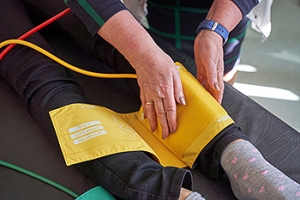

Peripheral artery disease, also known as PAD, develops when plaque builds up in the arteries, which reduces blood flow to the feet and ankles. One of the earliest warning signs of PAD is foot or calf cramping while walking, which may ease with rest, but can return with activity. Other symptoms include feet that feel unusually cold and pale, bluish skin on the toes, brittle toenails that grow slowly, and wounds or ulcers on the feet that do not heal properly. Some patients also notice thinning hair on the lower legs or ongoing pain that becomes constant as the condition advances. To confirm a diagnosis of peripheral artery disease, a podiatrist may check circulation using the ankle-brachial index, which compares blood pressure in the ankle and arm, or imaging tests like duplex ultrasound to evaluate blood flow. If you are experiencing symptoms of PAD, it is suggested that you schedule an appointment with a podiatrist for an exam and appropriate treatment.
Peripheral artery disease can pose a serious risk to your health. It can increase the risk of stroke and heart attack. If you have symptoms of peripheral artery disease, consult with Roy Rothman, DPM from Florida. Our doctor will assess your condition and provide you with quality foot and ankle treatment.
Peripheral artery disease (PAD) is when arteries are constricted due to plaque (fatty deposits) build-up. This results in less blood flow to the legs and other extremities. The main cause of PAD is atherosclerosis, in which plaque builds up in the arteries.
Symptoms
Symptoms of PAD include:
It is important to note that a majority of individuals never show any symptoms of PAD.
Diagnosis
While PAD occurs in the legs and arteries, Podiatrists can diagnose PAD. Podiatrists utilize a test called an ankle-brachial index (ABI). An ABI test compares blood pressure in your arm to you ankle to see if any abnormality occurs. Ultrasound and imaging devices may also be used.
Treatment
Fortunately, lifestyle changes such as maintaining a healthy diet, exercising, managing cholesterol and blood sugar levels, and quitting smoking, can all treat PAD. Medications that prevent clots from occurring can be prescribed. Finally, in some cases, surgery may be recommended.
If you have any questions, please feel free to contact our office located in DeBary, FL . We offer the newest diagnostic and treatment technologies for all your foot care needs.


 Follow Us